
-
×
 7-STEP VIDEO TOOLKIT - SIDEHUSTLE NINJA PRO
1 × 5,00 $
7-STEP VIDEO TOOLKIT - SIDEHUSTLE NINJA PRO
1 × 5,00 $ -
×
 Shamanic Rituals to Embody the Healing Power of Spirit Animals - Puma Fredy Quispe Singona - The Shift Network
1 × 54,00 $
Shamanic Rituals to Embody the Healing Power of Spirit Animals - Puma Fredy Quispe Singona - The Shift Network
1 × 54,00 $ -
×
 The Search for Exoplanets: What Astronomers Know with Joshua Winn
1 × 5,00 $
The Search for Exoplanets: What Astronomers Know with Joshua Winn
1 × 5,00 $ -
×
 Bending Reality – 6 Week Quantum Manifesting Experience
1 × 5,00 $
Bending Reality – 6 Week Quantum Manifesting Experience
1 × 5,00 $ -
×
 Rainmaker Novation 3.0 - Richard Wonders
1 × 31,00 $
Rainmaker Novation 3.0 - Richard Wonders
1 × 31,00 $ -
×
 How to Cultivate the Mind of the Warrior - David Goggins
1 × 5,00 $
How to Cultivate the Mind of the Warrior - David Goggins
1 × 5,00 $ -
×
 Safety Planning with Suicidal Clients with John Sommers-Flanagan
1 × 8,00 $
Safety Planning with Suicidal Clients with John Sommers-Flanagan
1 × 8,00 $ -
×
 Perform Energy Clearings on Yourself & Other People - Jean Haner
1 × 39,00 $
Perform Energy Clearings on Yourself & Other People - Jean Haner
1 × 39,00 $ -
×
 Introduction to Figure Drawing - Essential Gesture & Structure By Amy Wynne
1 × 6,00 $
Introduction to Figure Drawing - Essential Gesture & Structure By Amy Wynne
1 × 6,00 $ -
×
 Girlfriend In A Week System with Jonathan Green
1 × 5,00 $
Girlfriend In A Week System with Jonathan Green
1 × 5,00 $ -
×
 The 12-Week Rapid Transformation Intensive by Benjamin Hardy
1 × 25,00 $
The 12-Week Rapid Transformation Intensive by Benjamin Hardy
1 × 25,00 $ -
×
 Affiliate Millions
1 × 5,00 $
Affiliate Millions
1 × 5,00 $ -
×
 StyleLife - 31 Day Master Program: Online Academy for Attraction with Neil Strauss
1 × 5,00 $
StyleLife - 31 Day Master Program: Online Academy for Attraction with Neil Strauss
1 × 5,00 $ -
×
 Inboxlab.io Program by Jimmy Fung
1 × 5,00 $
Inboxlab.io Program by Jimmy Fung
1 × 5,00 $ -
×
 Yoga, Ayurveda, Mantra & Meditation Course with Vamadeva Shastri
1 × 101,00 $
Yoga, Ayurveda, Mantra & Meditation Course with Vamadeva Shastri
1 × 101,00 $ -
×
 P90X with Tony Horton
1 × 5,00 $
P90X with Tony Horton
1 × 5,00 $ -
×
 B25 Super Block 2023 by Shaun T
1 × 5,00 $
B25 Super Block 2023 by Shaun T
1 × 5,00 $ -
×
 14-Day High Ticket Course Launch Formula - Aaron Fletcher
1 × 5,00 $
14-Day High Ticket Course Launch Formula - Aaron Fletcher
1 × 5,00 $ -
×
 Great Presidents with Allan Lichtman
1 × 5,00 $
Great Presidents with Allan Lichtman
1 × 5,00 $ -
×
 The Magnetic Collective with Becky Keen
1 × 69,00 $
The Magnetic Collective with Becky Keen
1 × 69,00 $ -
×
 Learning to Light Day Exteriors with Shane Hurlbut
1 × 8,00 $
Learning to Light Day Exteriors with Shane Hurlbut
1 × 8,00 $ -
×
 Being Confident Is Accepting The Good And The Bad with Cory Skyy
1 × 5,00 $
Being Confident Is Accepting The Good And The Bad with Cory Skyy
1 × 5,00 $ -
×
 Reframe Your Thinking with Ava DuVernay
1 × 6,00 $
Reframe Your Thinking with Ava DuVernay
1 × 6,00 $ -
×
 The Rise of Communism: From Marx to Lenin with Vejas Gabriel Liulevicius
1 × 5,00 $
The Rise of Communism: From Marx to Lenin with Vejas Gabriel Liulevicius
1 × 5,00 $ -
×
 The Art of Astral Projection 2023 with Jade Shaw - MindValley
1 × 5,00 $
The Art of Astral Projection 2023 with Jade Shaw - MindValley
1 × 5,00 $ -
×
 The Handsome Factor Guidance For Every Alpha Male with Mark Belmont
1 × 5,00 $
The Handsome Factor Guidance For Every Alpha Male with Mark Belmont
1 × 5,00 $ -
×
 SHOCKWAVE FX with Cine Packs
1 × 15,00 $
SHOCKWAVE FX with Cine Packs
1 × 15,00 $ -
×
 Overcome Neediness, Attachment, Fears (Audio Seminar) by Apollonia Ponti
1 × 15,00 $
Overcome Neediness, Attachment, Fears (Audio Seminar) by Apollonia Ponti
1 × 15,00 $ -
×
 The Great Revolutions of Modern History with Lynne Ann Hartnett
1 × 5,00 $
The Great Revolutions of Modern History with Lynne Ann Hartnett
1 × 5,00 $ -
×
 Niche Domination Prodigy
1 × 5,00 $
Niche Domination Prodigy
1 × 5,00 $ -
×
 Fitness Nutrition 101 How to Lose Fat & Build Muscle
1 × 5,00 $
Fitness Nutrition 101 How to Lose Fat & Build Muscle
1 × 5,00 $ -
×
 How To Get Your Clients To Send You More Clients with Maria Wendt
1 × 5,00 $
How To Get Your Clients To Send You More Clients with Maria Wendt
1 × 5,00 $ -
×
 Relational EMDR Experiential Course with Deany Laliotis: Step-by-Step Skills and Consultation - Deany Laliotis - PESI
1 × 62,00 $
Relational EMDR Experiential Course with Deany Laliotis: Step-by-Step Skills and Consultation - Deany Laliotis - PESI
1 × 62,00 $


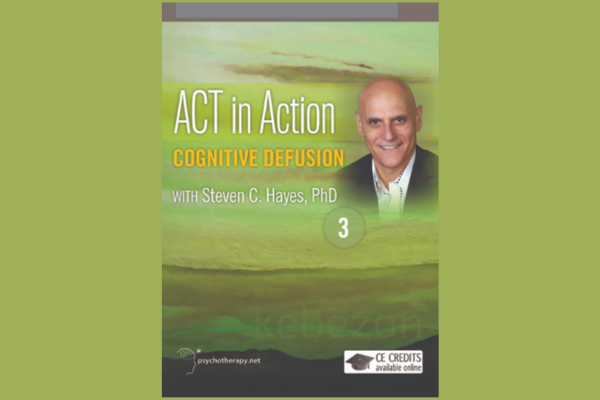
Cognitive Defusion With Steven Hayes
8,00 $
Download Cognitive Defusion With Steven Hayes, check content proof here:

Cognitive Defusion: A Detailed Exploration with Steven Hayes
Cognitive defusion, a transformative psychological concept primarily linked to Acceptance and Commitment Therapy (ACT), has captivated mental health professionals and researchers alike. Developed in part by Steven C. Hayes, this groundbreaking technique encourages individuals to reframe their relationship with thoughts, rather than attempting to change those thoughts directly. This innovative approach seeks to reduce the relentless grip of automatic cognitive functions by fostering a deeper awareness of the thinking process, allowing individuals to perceive their thoughts as mere mental events rather than absolute truths. In this comprehensive exploration, we will delve into the intricacies of cognitive defusion, examine its techniques, and evaluate its efficacy in enhancing psychological flexibility and overall wellbeing.
Understanding Cognitive Defusion
Cognitive defusion is built upon the foundation of recognizing and altering one’s relationship with thoughts, echoing a fundamental shift in psychological practice. This concept encourages individuals to view their thoughts with a lens of curiosity rather than compliance. Instead of seeing thoughts as dictatorial commands that one must follow, cognitive defusion promotes a perspective in which thoughts are seen as transient and mutable, akin to clouds floating in the vastness of the sky.
Consider the metaphor of a leaf floating down a river. If one were to grasp the leaf tightly, it would be impossible to follow the river’s current. In a similar way, when individuals hold onto their thoughts too tightly, they risk becoming entrenched in negative thinking patterns. However, cognitive defusion teaches one to release their grip, watching thoughts drift by like leaves, recognizing their presence without allowing them to dictate actions or feelings.
This perspective fosters a sense of psychological distance, which can be profoundly liberating. By understanding that thoughts are not inherently truths, individuals can begin to disentangle themselves from the distress associated with negative self-referential thoughts. For instance, instead of viewing a thought like “I am not good enough” as an immutable fact, cognitive defusion encourages one to see it as just another passing thought, thereby reducing its emotional weight and influence.
Techniques of Cognitive Defusion
Within the framework of cognitive defusion, various techniques serve as tools to facilitate this transformative shift in perception. Here is a comprehensive list of some key techniques:
- De-actualization:
- Individuals learn to view thoughts from a distance. This technique encourages listening to thoughts as if they were mere background noise, thereby reducing their impact.
- Imagery:
- Mental imagery can help one visualize thoughts. For example, imagining negative thoughts as balloons that one can let go of allows for a release of emotional tension.
- Linguistic Play:
- Playing with language and reframing statements can help detach oneself from negative self-talk. Instead of “I am a failure,” one might say “I notice I’m having the thought that I am a failure,” creating distance and neutrality.
- Mindfulness Exercises:
- Engaging in mindfulness practices helps center attention in the present moment, which can diminish the believability of unhelpful thoughts.
This arsenal of techniques cultivates an environment where individuals can practice viewing their thoughts with decreased attachment. Each technique acts as a stepping stone to greater realization and autonomy over one’s cognitive processes, which is pivotal for emotional regulation.
The Role of Psychological Flexibility
Psychological flexibility, a core component of ACT, underscores the importance of adapting to situational demands while pursuing values-driven actions, even amidst challenging thoughts and emotions. Cognitive defusion enhances psychological flexibility, allowing individuals to walk hand-in-hand with their thoughts without being governed by them.
Research has illuminated the relationship between cognitive defusion and psychological flexibility, demonstrating that those who utilize cognitive defusion techniques experience significant reductions in the discomfort associated with negative thoughts. For example, a study conducted by Hayes et al. (2006) found that individuals who practiced cognitive defusion reported feeling less overwhelmed by self-critical thoughts, leading to improved emotional wellbeing.
Such empirical evidence solidifies cognitive defusion’s role as a powerful catalyst for change. When individuals learn to navigate their internal landscapes with greater acceptance and less resistance, they cultivate resilience against stressors that could otherwise derail their progress toward a fulfilling life.
Practical Applications and Outcomes
The practical applications of cognitive defusion are vast and varied, extending from therapeutic settings to everyday life. Here are some notable outcomes associated with the effective use of cognitive defusion techniques:
- Reduction of Anxiety Symptoms: By altering one’s engagement with anxious thoughts, individuals can experience diminished anxiety levels, leading to improved daily functioning.
- Enhanced Emotional Regulation: Practicing cognitive defusion provides individuals with tools to manage their emotions more effectively, leading to healthier responses to triggers.
- Greater Engagement in Values: When the grip of negative thoughts lessens, individuals are freer to pursue actions aligned with their core values, fostering a richer, more meaningful life.
- Improved Relationships: When one’s mental processes are less dominated by negative thoughts, interpersonal relationships can flourish, as individuals are more present and responsive to others.
These outcomes reflect a significant shift towards cultivating overall psychological wellbeing, showcasing cognitive defusion’s efficacy in both clinical and personal realms.
Summary of Key Research Findings
Research consistently validates the efficacy of cognitive defusion in enhancing psychological wellbeing. Here’s a brief summary of some pivotal studies:
| Study Title | Authors | Findings |
| The Impact of Cognitive Defusion | Hayes et al. (2006) | Cognitive defusion reduces the impact of negative self-referential thoughts. |
| Psychological Flexibility in ACT | Twohig et al. (2009) | Psychological flexibility is positively correlated with cognitive defusion. |
| Defusion Techniques in Clinical Settings | Gámez et al. (2016) | Clinical improvements noted with cognitive defusion strategies. |
As evidenced, these studies underline the importance of incorporating cognitive defusion into therapeutic practices, reinforcing its critical role in enhancing mental health outcomes.
Conclusion
In conclusion, cognitive defusion, as conceptualized by Steven Hayes, offers a profound set of strategies designed to transform one’s interaction with thoughts and enhance psychological flexibility. By altering the perception of thoughts from strict truths to mere mental events, cognitive defusion aids individuals in disengaging from unproductive thinking patterns while promoting psychological resilience and overall wellbeing. The techniques associated with cognitive defusion – from de-actualization to mindful engagement – empower individuals to navigate their internal landscapes with confidence and vitality.
As we move forward in the realms of psychological research and therapeutic practice, cognitive defusion stands as a testament to the power of awareness and acceptance within mental health treatment. By embracing this innovative approach, we can cultivate a deeper understanding of the intricate dance between thoughts and emotions, paving the way for more fulfilling lives.
Frequently Asked Questions:
Business Model Innovation:
Embrace the concept of a legitimate business! Our strategy revolves around organizing group buys where participants collectively share the costs. The pooled funds are used to purchase popular courses, which we then offer to individuals with limited financial resources. While the authors of these courses might have concerns, our clients appreciate the affordability and accessibility we provide.
The Legal Landscape:
The legality of our activities is a gray area. Although we don’t have explicit permission from the course authors to resell the material, there’s a technical nuance involved. The course authors did not outline specific restrictions on resale when the courses were purchased. This legal nuance presents both an opportunity for us and a benefit for those seeking affordable access.
Quality Assurance: Addressing the Core Issue
When it comes to quality, purchasing a course directly from the sale page ensures that all materials and resources are identical to those obtained through traditional channels.
However, we set ourselves apart by offering more than just personal research and resale. It’s important to understand that we are not the official providers of these courses, which means that certain premium services are not included in our offering:
- There are no scheduled coaching calls or sessions with the author.
- Access to the author’s private Facebook group or web portal is not available.
- Membership in the author’s private forum is not included.
- There is no direct email support from the author or their team.
We operate independently with the aim of making courses more affordable by excluding the additional services offered through official channels. We greatly appreciate your understanding of our unique approach.
Be the first to review “Cognitive Defusion With Steven Hayes”
You must be logged in to post a review.
Related products
Original price was: 29,00 $.8,00 $Current price is: 8,00 $.

Psychology
Policy Affects Practice & Students/Practitioners Affect Policy with Influencing Social Policy
Original price was: 19,00 $.8,00 $Current price is: 8,00 $.



Original price was: 99,00 $.39,00 $Current price is: 39,00 $.

Original price was: 39,00 $.8,00 $Current price is: 8,00 $.

Original price was: 1.100,00 $.241,00 $Current price is: 241,00 $.

Psychology
IFS & The Treatment of Addictions: Biology, Healing and Habits with Frank Anderson – PESI
Original price was: 59,00 $.15,00 $Current price is: 15,00 $.
Reviews
There are no reviews yet.